
Guidelines for COVID-19 management in India
The guidelines issued by Home Ministry specify the National Directives for COVID-19 management, which shall apply to public places and work places. Under these guidelines, wearing of face covers is
The guidelines issued by Home Ministry specify the National Directives for COVID-19 management, which shall apply to public places and work places. Under these guidelines, wearing of face covers is
At least one-third of all cancer cases are preventable. Prevention offers the most cost-effective long-term strategy for the control of cancer, says World Health Organization. Followings are various factors which
A study published in the American Journal of Psychiatry suggests an association between smoking during pregnancy and increased risk for developing bipolar disorder (BD) in adult children. Researchers evaluated offspring

Indian Health Ministry has added reduction in the usage of solid fuels in kitchens as one of the key targets to its national framework for control of non-communicable diseases. The
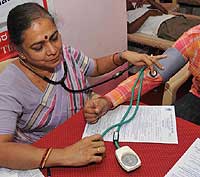
Fast-moving lifestyles, unearthly hours at work, stress, addiction to alcohol and unhealthy meals are making more and more Indians fall prey to high blood pressure at a very young age.

The 12th Five Year Plan seeks to expand the reach of healthcare and work towards long term objective of establishing a system of Universal Health Coverage in the country. During

The second BRICS Health Ministers’ Meet held in New Delhi. First day held at Dr. Ramalingaswamy Auditorium, AIIMS, New Delhi and the second day at Banquet Hall, Ashoka Hotel, New
Clinicians from the USC School of Dentistry unravel connection between the incidence of oral cancer and race and ethnicity– as part of first epidemiological study of oral cancer in California. Dr. Satish Kumar and Dr.Parish Sedghizadeh, clinical professors in the school’s Division of Diagnostic Sciences, gleaned through 20 years of records from the California Cancer Registry (CCR)—the state’s cancer surveillance database—for the incidence rates of invasive squamous cell carcinoma, the most common form of oral cancer.
Despite major efforts to educate the public on the dangers of smoking over the past 40 years, a new national survey conducted by the American Legacy Foundation and GlaxoSmithKline Consumer Healthcare, an industry leader in smoking cessation, indicates major knowledge gaps exist in what smokers believe to be true about the risks associated with smoking compared the actual realities of tobacco-related disease and death. Experts believe these misperceptions may prevent smokers from trying to quit and successfully utilizing proven smoking cessation treatments.
The term Emotional Intelligence could be defined as the capacity to perceive, comprehend and regulate one’s own emotions and those of others so as to be able to distinguish between emotions and use this information as a guide for one’s thoughts and actions. One of the important benefits of developing this type of intelligence is the ability to learn how to interact with others and to face an ever changing social and cultural world more effectively.