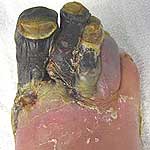
Gangrene treatment – new ways to cure gangrene

Gangrene treatment – new ways to cure gangrene

Gangrene is localized soft-tissue death (necrosis) from prolonged blood-supply blockage. It can occur in atherosclerosis, diabetes mellitus, or decubitus ulcer, and after severe burns or frostbite.

New research studies are finding different new ways to treat gangrene to save body parts.

Gangrene is a dreadful disease in which the profession has failed to offer much in the way of relief for these patients.

Antipsychotic medicines cause obesity and diabetes

In 2008, roughly 14.3 million Americans were taking antipsychotics—typically prescribed for bipolar disorder, schizophrenia, or a number of other behavioral disorders—making them among the most prescribed drugs in the U.S. Almost all of these medications are known to cause the metabolic side effects of obesity and diabetes, leaving patients with a difficult choice between improving their mental health and damaging their physical health.

H1N1 flu :: Pandemic swine flu – H1N1 Influenza

Novel H1N1 (referred to as “swine flu” early on) is a new influenza virus causing illness in people. This new virus was first detected in people in the United States in April 2009. Other countries, including Mexico and Canada, have reported people sick with this new virus. This virus is spreading from person-to-person, probably in much the same way that regular seasonal influenza viruses spread.

Pregnancy :: Drinking during pregnancy damages brain of unborn

Alcohol consumption during pregnancy is a significant public health problem and may result in a wide range of adverse outcomes for the child. Many Fetal Alcohol Syndrome patients have problems coping with stress; they have learning disabilities, infections, and increased susceptibility to diseases.

Liver Cancer :: Nexavar approved for patients with inoperable liver cancer

Anticancer drug Nexavar raised survival period in inoperable hepatocellular carcinoma patients suffering from this kind of liver cancer. The U.S. Food and Drug Administration has approved Nexavar (sorafenib) for use in patients with a form of liver cancer known as hepatocellular carcinoma, when the cancer is inoperable. Nexavar was originally approved in 2005 for the treatment of patients with advanced renal cell carcinoma, a form of kidney cancer.

Stem Cell :: Human embryonic stem cells derived from preimplantation genetically diagnosed embryos

A human stem cell line derived from embryos that were identified by preimplantation genetic diagnosis (PGD) to carry the mutation for fragile X syndrome has provided an unprecedented view of early events associated with this disease. In addition to giving scientists fresh insight into fragile X, results from this unique model system have emphasized the value of this new source of embryonic stem cells and may have a significant impact on the way that genetic diseases are studied in the future.

Oral Cancer :: USC School of Dentistry researchers discover link between oral cancer and ethnicity

Clinicians from the USC School of Dentistry unravel connection between the incidence of oral cancer and race and ethnicity– as part of first epidemiological study of oral cancer in California. Dr. Satish Kumar and Dr.Parish Sedghizadeh, clinical professors in the school’s Division of Diagnostic Sciences, gleaned through 20 years of records from the California Cancer Registry (CCR)—the state’s cancer surveillance database—for the incidence rates of invasive squamous cell carcinoma, the most common form of oral cancer.

Dr. Anil Singhal Homeopathic Doctor | Dr. Anil Singhal's Blog | Manan - My Memoir by Dr. Anil Singhal | Boger's Legacy | Organon of Medicine | Health Newstrack